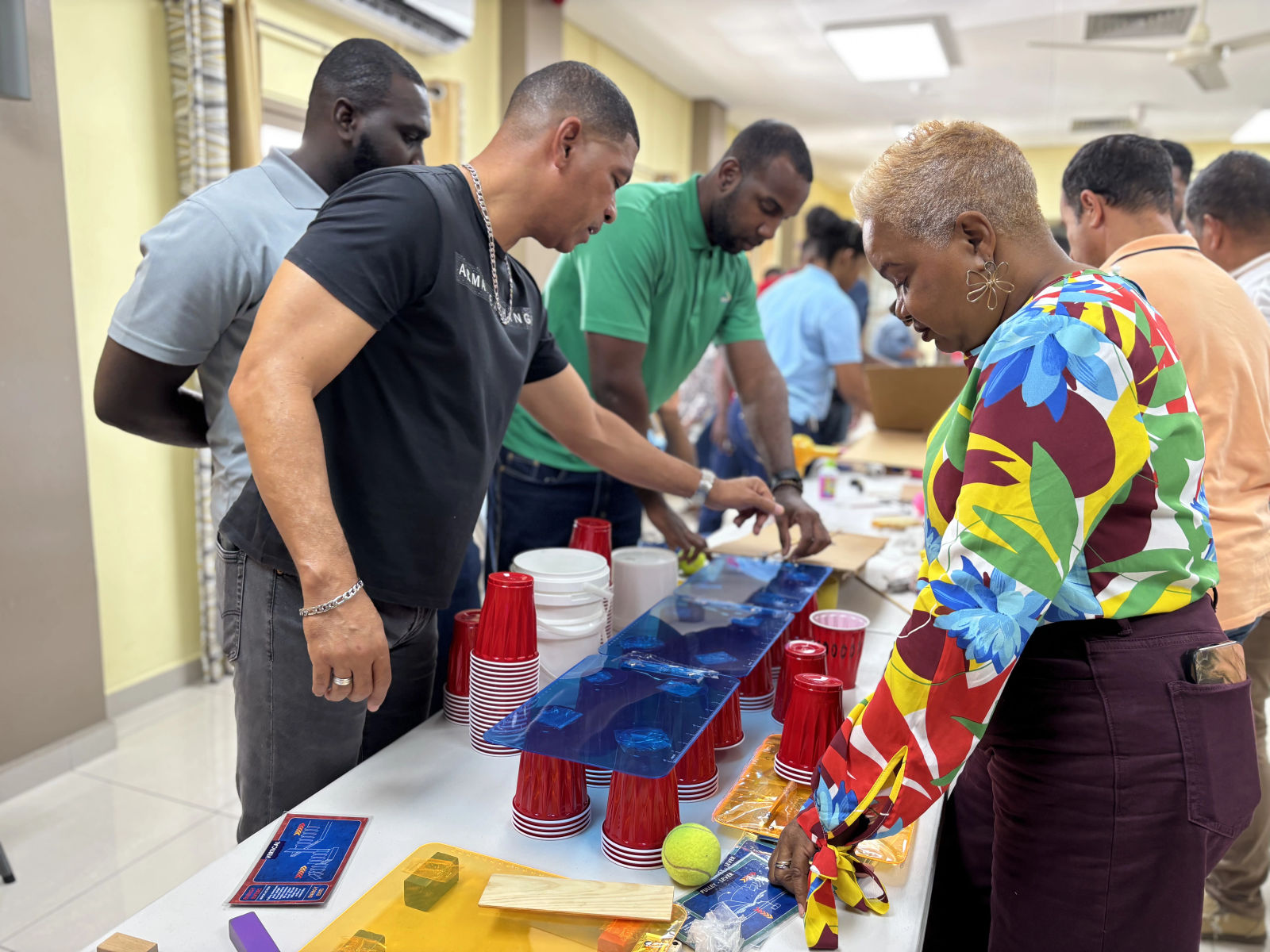
Does Team Building Work? Only If It Follows These 3 Rules "Team building changes nothing." We hear this a lot. Usually from someone who once spent a Friday doing trust falls and walked back into the same office on Monday.
Here's something we saw at one of our own sessions. Two colleagues had worked for the same company for 20 years. In all that time, they had hardly spoken to each other. Same building, same hallways, two decades of silence.
That day, they landed in the same group. They had to share information, split tasks and solve challenges side by side. For the first time in 20 years, they had a reason to talk. And they did.
That conversation matters most on Monday. Once you know someone, a work issue stops being an email you put off sending. You pick up the phone. You walk over to their desk. What used to drag on for days gets sorted in a few minutes.
The skeptic has a point. A random day of games would not have made that conversation happen. A designed day did. Our clients scored our team building days +90 this year on the Net Promoter Score, which runs from minus 100 to plus 100. In 65 reviews since 2022, not one client scored us below 7. Here's what we do differently. We build every session on three rules. Each one rests on research. Each one shows up in what our clients tell us afterwards.
Rule 1: The game mirrors your work
Every game we design runs on the same mechanics as your workday, simplified. A murder mystery or a car scavenger hunt looks nothing like your office at first sight. Look closer. There's a deadline. The information is scattered across people. Someone takes the lead and someone checks the details. You make a choice and see the result within minutes. Who shares information and who sits on it? What happens when two groups chase different goals? You see it play out, but nothing breaks. No client gets the wrong invoice. You get space to fail, talk about it and try again.
This space to fail builds what researchers call psychological safety. When Google studied 180 of its own teams, it ranked psychological safety the number one factor behind team effectiveness. Teams with high psychological safety were rated effective twice as often by executives. Our games give your team a low-stakes place to build it.
Maduro & Curiel's Bank felt it in September. Their feedback on the Squad Game described it as "a combination of serious topics, combined with a fun way of working together." Their verdict on the result: "The event connected the team; everyone participated and trusted each other with their thoughts on the several questions."
Aqualectra noticed the same in June. In their words, we "chose a teambuilding activity that aligned with the needs of the department."
Rule 2: Mix the teams
The colleagues in our story connected because they shared a group. We mix groups on purpose. If departments only play against each other, they go back to work as rivals.
MIT researcher Alex Pentland tracked how teams communicate using sensors. Face-to-face exchanges alone explained 35 percent of the variation in team performance. The highest-performing teams also looked for connections outside their own group.
The finance department of the Openbaar Lichaam Bonaire felt this during Trade Winds. Their feedback: "It felt like we already knew each other, even though many of us were meeting and interacting in this way for the first time." The result, in their words: "It brought us closer together as a team, helped us connect beyond our daily work."
Fundashon Kas Popular (FKP) saw this with Chain Reaction. A year after setting a new direction, they wanted every department to see how its work moves the next one. The game made those links visible. Other departments stopped being names in an email and became people with a face.
This is the payoff of knowing who sits on the other side. A direct line means people pick up the phone or walk over, and have a courageous conversation much sooner. No time lost in email threads. No energy drained by waiting. No extra friction from a message read in the wrong tone. Each of those costs your team, your clients, your results and your productivity.
Rule 3: Debrief before anyone goes home
The game shows your team how it behaves. The debrief turns what happened into something you use. Every session ends with a debrief, tailored to the game, the team and your briefing. We connect moments from the game to your daily work. Why did the information get stuck with one group? Who took the lead when time ran out? What would you do differently on Monday?
Then your team takes it back to the office. Plan 15 minutes in your first meeting after the session. What do we keep doing? Who do we need to talk to more? Put the answers somewhere everyone sees them.
FKP shows up here too. We suggested holding their session on a Thursday so the team could talk it through on Friday. Their feedback: the timing "was also a success. We couldn't stop talking about it."
This step turns one good day into a habit. Researchers Tannenbaum and Cerasoli reviewed debrief research covering 2,136 people across 46 samples. Well-run debriefs improved performance by 20 to 25 percent, and facilitated debriefs did best. The debrief gives your team its first round of practice. The follow-up keeps it going.
What our clients told us
We asked MCB what could have been better. Their answer: "I can't think of anything that could have been done differently." We'll take it.
OLB's finance department in Bonaire had one complaint: "If anything, I would love to have a full day with Reshapers next time!" Complaint noted.
Safety, connection and a shared way of working don't show up in a single Friday. They show up in the weeks after, in who speaks up, who picks up the phone and how fast a problem moves from one desk to the next.
Practice tip: Pick one issue your departments keep bouncing between them. Put one person from each side in a room for 20 minutes with three questions. Where does the work get stuck? What do you need from each other? Who calls whom next time? Write the answers down and check in again in two weeks.
If 20 minutes isn't enough for the conversation your teams need, let's design your team day together.
You might also like
After the World Cup
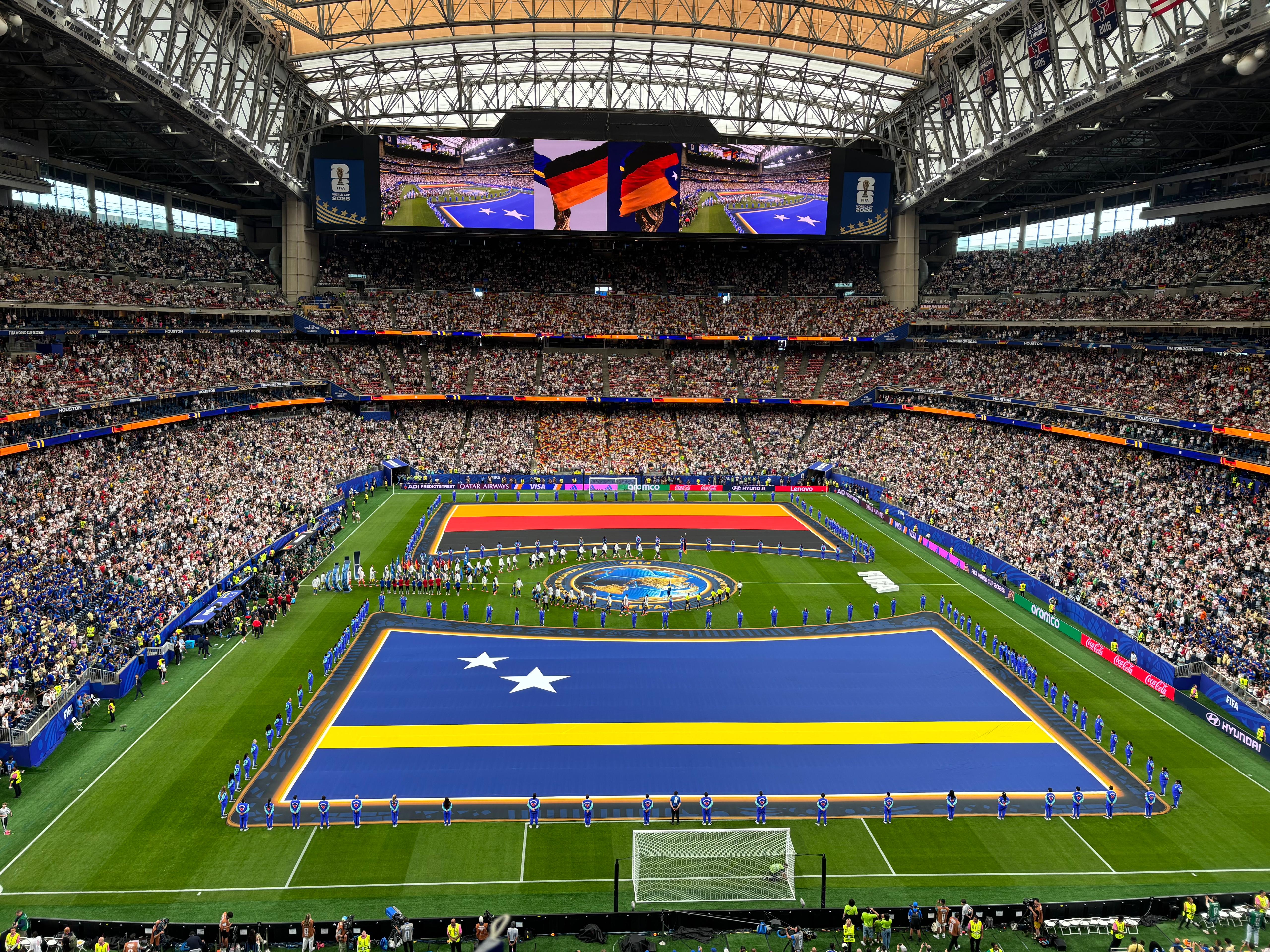
Getting to the World Cup took determination. Fans flew in on routes through Aruba, Bonaire, Colombia, Panama and beyond, connections that stretched 15, 20, even 36 hours, all to reach Houston, Kansas City and Philadelphia. Others turned it into a road trip instead, driving as far as they had to once they landed in the US. Every route led to the same place: wherever Curaçao played. There is always a way to reach where you want to be. Determination, focus and efficiency get you there.
Read more
The Boat Had to Float
Two teammates climb into a boat built from cardboard and packing tape. The tide is already testing the seams. In the next few seconds, three hours of work either holds together or comes apart in front of the whole team watching from the sand. This is how Merck closed a multi day trip to Curaçao.
Read more
Custom Team Building That Makes Company Values Stick
You can put them on a poster. You can print them in the onboarding booklet. You can run a workshop. You can add them to the shared drive. And still, that is not the same as living in the culture.
Read more