The Adidas Lesson: Stop Selling, Start Storytelling

If you watched Adidas' Backyard Legends and felt something before you noticed the logo, you are not alone. Sixty seconds in, you forgot you were watching an ad. And the point lands hard. It tells you everything about where commercial storytelling is heading.
We are watching a shift in how brands earn attention. The old playbook was simple. Pay for thirty seconds of airtime, show your product, repeat your tagline and hope for recall. The new playbook looks nothing like a playbook. It looks like a short film. A music video. A scene from a life you want to live.
Football belongs to everyone now
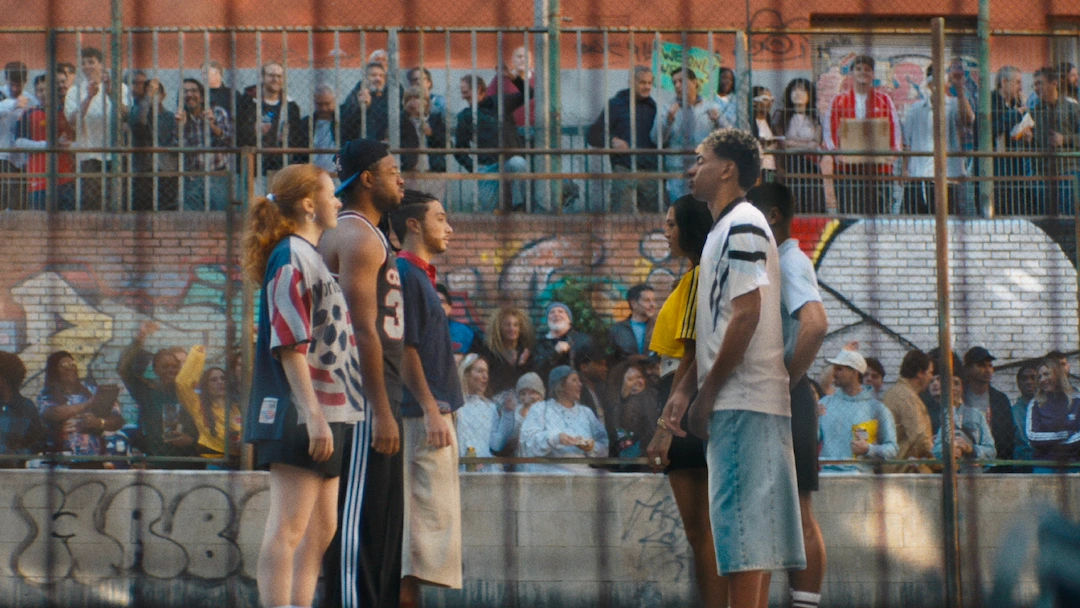
Backyard Legends made more than one smart choice. It shifts the clock back to 1996, dropping you into a specific moment in time where the game felt raw and personal. The grainy footage, the era-specific styling, the soundtrack all trigger something before you even process why. Nostalgia is the doorway. Once you are inside it, the film refuses to treat football as a sport reserved for stadiums. Yes, the professionals are there. So are the kids on the corner, the guys playing in flip flops on cracked tarmac, the women on the beach with no goalposts and no rules. The story belongs to us.
This is inclusivity done well. Not as a checkbox or a press release, but as a creative decision. When you see street football framed with the same care as professional football, you see yourself in it. You become part of the brand without anyone telling you to buy something. The clothes are there, lived in, scuffed at the knees, sweat marked at the back, looking like they have been worn through a real game. They are not a product on display. They are part of you.
Here is how you know it worked. I walked into the office the morning after and the conversation had already started. Who had the old Adidas jacket. Which one. Where is it now. What is it worth. Nobody was talking about the new collection. They were talking about the originals, the ones they grew up in, the ones sitting in a wardrobe or listed on a resale site for three times what they paid. The short played a trick on our subconscious. It sold the new line and the collectables at the same time without mentioning either.
And that is really what it comes down to. When the product lives in the world instead of being held up to a camera, people stop seeing it as a sell.
Stories first, products second
Across the most talked-about commercials of the year, one thing keeps showing up. The story takes centre stage and the product lives in the background. You watch 26 dancers move through a white hall in a Gap commercial and you forget you are looking at clothes. You are watching choreography. You are watching joy. You are watching flexibility, drape, range of movement, all expressed through a body in motion. By the time the brand logo flashes, you already feel something about it.
Gap committed fully to this concept. They continue producing what looks like a music video with dance at the centre and quietly let the clothing show its own qualities through how the dancers wore it. No close-up on stitching. No voiceover explaining the fabric blend. The styling speaks for itself because the story makes you want to look at it.
This is the move I find most interesting from a marketing and communications angle. Brands are realising the audience has stopped listening to product features. People are scrolling past anything resembling a pitch. The only content surviving the scroll is content people would have watched anyway, for the story alone.
People want a lifestyle, not a sales pitch

Here is the honest part. Consumers are exhausted by being sold to. The average person sees thousands of ads a day across feeds, screens, billboards, podcasts and packaging. The bar to break through has moved. You no longer compete with other brands. You compete with the viewer’s friends, their group chats, the actor they follow on Instagram and the next video in their queue.
When the choice is between your thirty-second pitch and a six-second clip of someone they admire doing something they love, your pitch loses every time. Unless your pitch is a short film they would have watched anyway.
This is why the artistic concept is winning. It works because it stops asking for attention and earns it instead. The viewer comes in for the story, the music, the movement, the feeling. They leave with the brand attached to the feeling. The transaction is emotional first, commercial second.
What this means for your brand
If you are thinking about your own brand right now, here is what the shift looks like in practical terms.
Lead with story. Decide what feeling you want a viewer to walk away with, then build everything around the feeling. The product fits inside the story. The story does not fit inside the product.
Show your work being lived in. Clothes worn through a real moment beat clothes hanging on a model. Software used in a real workflow beats a screen recording with a polished voiceover. Whatever you make, show it inside a life people recognise or want.
Cast wider. Inclusivity reads as authentic when it shows up in the casting, the locations, the styling and the music, not as a side note. Audiences see through the gesture. They feel the real one.
Trust the audience. The Adidas and Gap commercials succeed because they refuse to over-explain. They give you the story and trust you to connect the dots. Brands stuck in the old model still feel the need to say everything out loud. The new model lets you feel it.
Think longer to go shorter. The smartest brands are producing hero pieces running ninety seconds to five minutes, longer than any traditional commercial, then clipping them into fifteen to thirty second cuts for feeds. One story, built once, distributed everywhere. The longer format gives the narrative room to breathe. The shorter cuts give it reach. The skill is worth investing in.
The takeaway
The market is shifting because the audience already shifted. People stopped watching commercials a long time ago. What they watch now is content. The brands winning attention have stopped putting up resistance to the fact. They are making the content their audience would have watched without them and putting themselves carefully inside it.
Adidas understood this. Gap understood this. Your brand has the same opportunity. Stop selling. Start telling a story worth watching. Then let the product live inside it.
You might also like

Knowing Your Persona Beats Knowing Your Audience
Your Audience Gets You in the Room. Your Persona Gets You the Buyer. Your marketing team defined a target audience last quarter. Women, 35 to 50, mid-level managers, world travelers. The campaign launched on schedule and still underperformed. The audience definition was not wrong. It was simply not finished.
Read more
We Gave Our MarCom Team the Day We Give Our Clients
Last month we published an article making the case that it is never too late to reset your marketing strategy. The right moment is the moment you decide to act. On March 20, we acted.
Read more
It's Not Too Late to Fix Your Marketing Strategy
The first quarter is not over. You still have time. But you need to move now. Most companies start the year the same way. They hit January with energy, skip the strategy conversation, and dive straight into tactics. Social posts go up. Campaigns get planned. Budgets get allocated. Everyone is busy. Busy is not the same as aligned.
Read more